
Wondering what to buy in Japan? We’ve rounded up a list of unique and awesome Japanese souvenirs so you don’t end up filling your suitcase with unnecessary purchases.
Okay, real talk: I’m not usually a souvenir person. I’d rather spend my money on experiences, unique stays, or just the flight itself.
But Japan is the exception.
There are so many incredibly unique things you can only find there: artwork, ceramics, skincare products, cultural items, Japanese snacks… I could go on and on.
Tourists often go a little crazy shopping in Japan. I’ve even heard of people buying an extra suitcase just to haul it all home. I personally think that’s overkill.
My biggest piece of advice instead of just shopping ‘til you drop, is to come with a bit of a plan.
Ask yourself…
- What kinds of special things you actually want to seek out?
- How much money you want to spend?
- How much suitcase space you’re willing to dedicate?
Our experience buying souvenirs in Japan
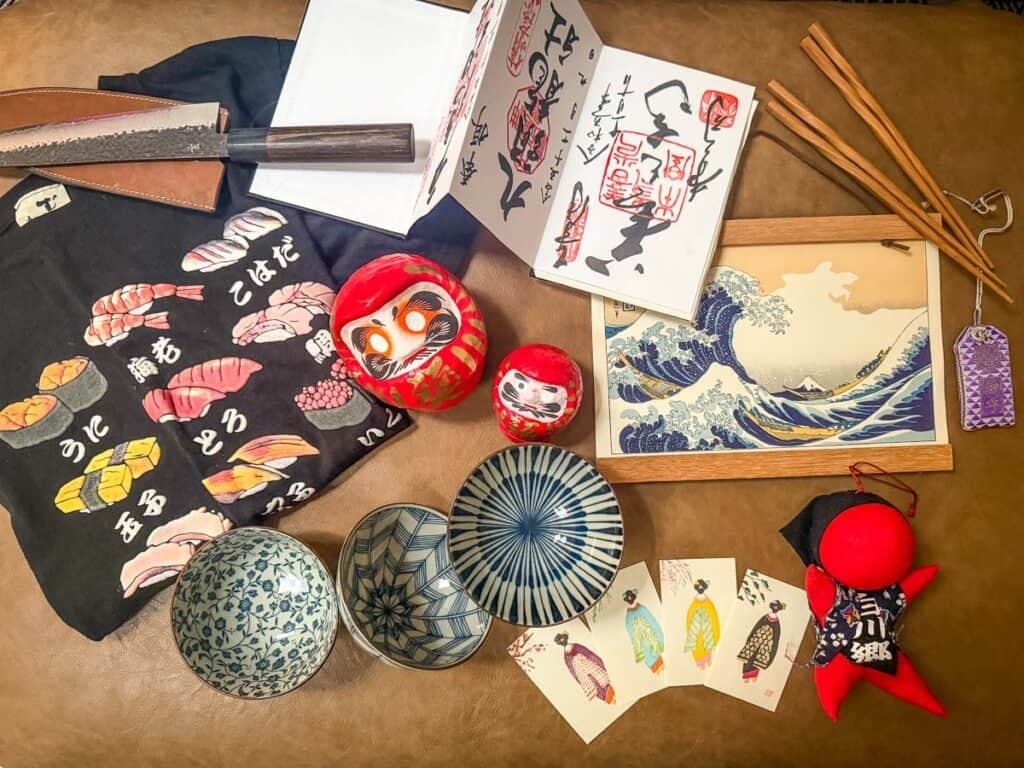
Some of my personal favorite souvenirs are things I actually use or look at every single day. For example, I have ceramic bowls I reach for constantly in my kitchen, chopsticks (very practical!), some beautiful artwork, and two Daruma I got on 2 different trips to Japan.
I also have a goshuincho, a stamp book where you collect ink seals from temples and shrines around the country, and filling it has become one of my favorite parts of traveling through Japan.
After traveling to Japan several times, I made a list of the souvenirs I actually use and would buy again. Hopefully this helps make the hunt a bit less overwhelming for you!
Quick list of our top Japanese souvenirs
- Japanese knife: one of our favorite souvenirs ever (we use this daily!)
- Goshuin: hand-stamped temple and shrine inscriptions collected in a special book
- Omamori: traditional charms offering blessings like luck, safety, or success.
- Ceramic bowls: beautifully made pieces that elevate everyday meals
- Chopsticks: lightweight, functional, and available in endless styles
- Matcha: the best place to stock up
1. Goshuin book
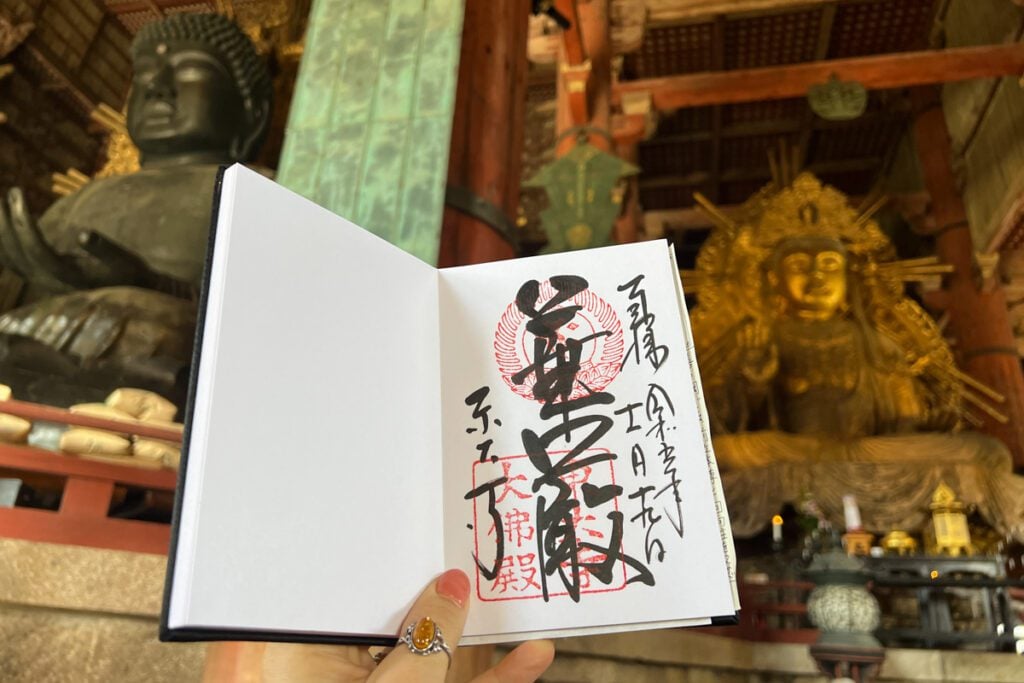
One of the most interesting and unique Japanese souvenirs you can get is to collect goshuin: red stamps alongside handwritten records of the shrines and temples you visit.
You will use a special book to collect these stamps, called goshuincho, which can be purchased at many temples or shrines.
Collecting goshuin is a centuries-old tradition and a cool way to remember the sites you visited in Japan.
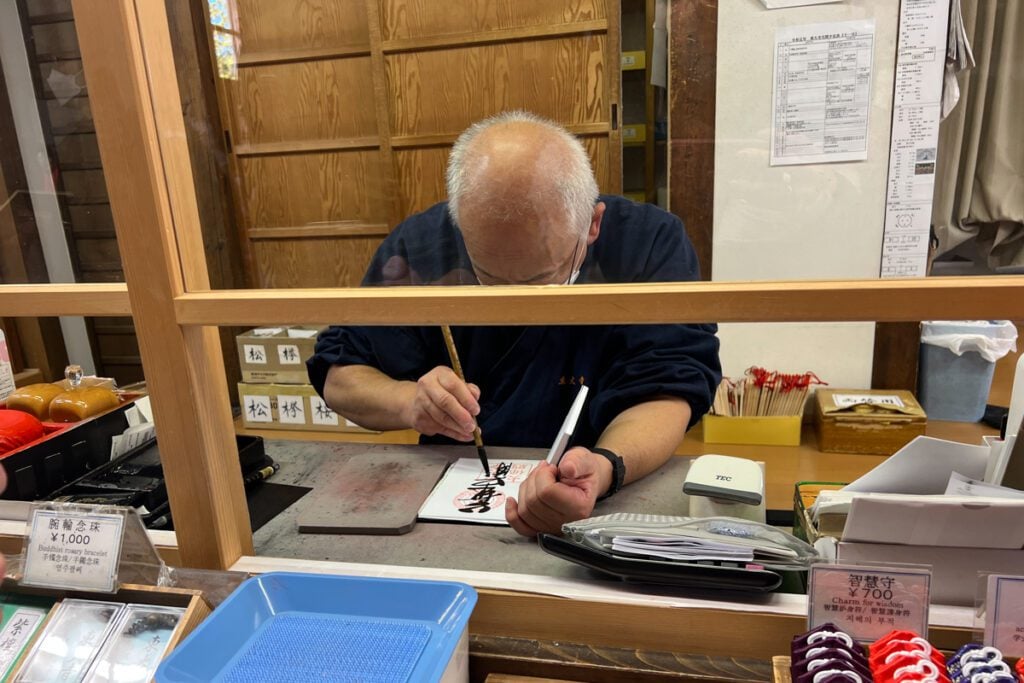
How to collect goshuin:
- Visit the designated goshuin office at a temple or shrine.
- Present your goshuincho.
- Pay a small fee, usually 300 to 500 yen.
- The attendant will add the seal and calligraphy using traditional techniques.
Insider tip: Take a photo with your goshuin in front of the temple or shrine so you don’t forget where it came from. They can easily blend together if you aren’t fluent.
📖 Make your own goshuin in Kyoto
Get crafty with a goshuin factory tour & workshop! See how goshuin books are made, then choose from tons of beautiful Yuzen washi papers to make your own.
2. Japanese knife
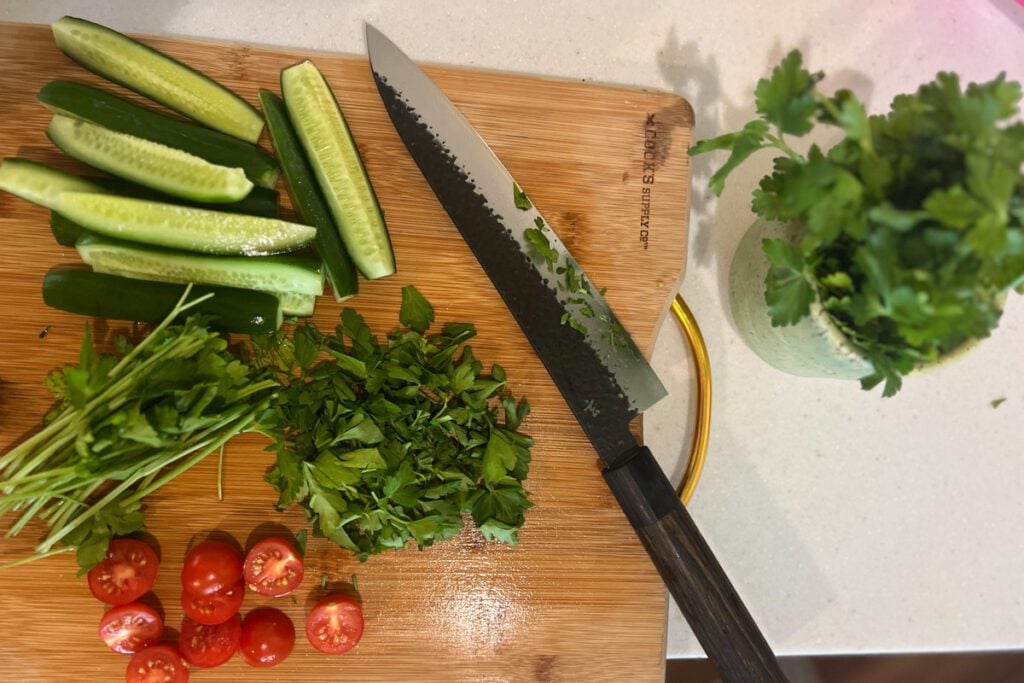
Japan is known for super high quality knives. I mean, those sushi chefs need to have the top-of-the-line knives, so you know you’ll find some Japanese brands. But for the really good knives, expect to pay handsomely.
There are knife shops where everything is made in house, as well as entire streets where you’ll find variety to choose from.
3. Ceramic bowls
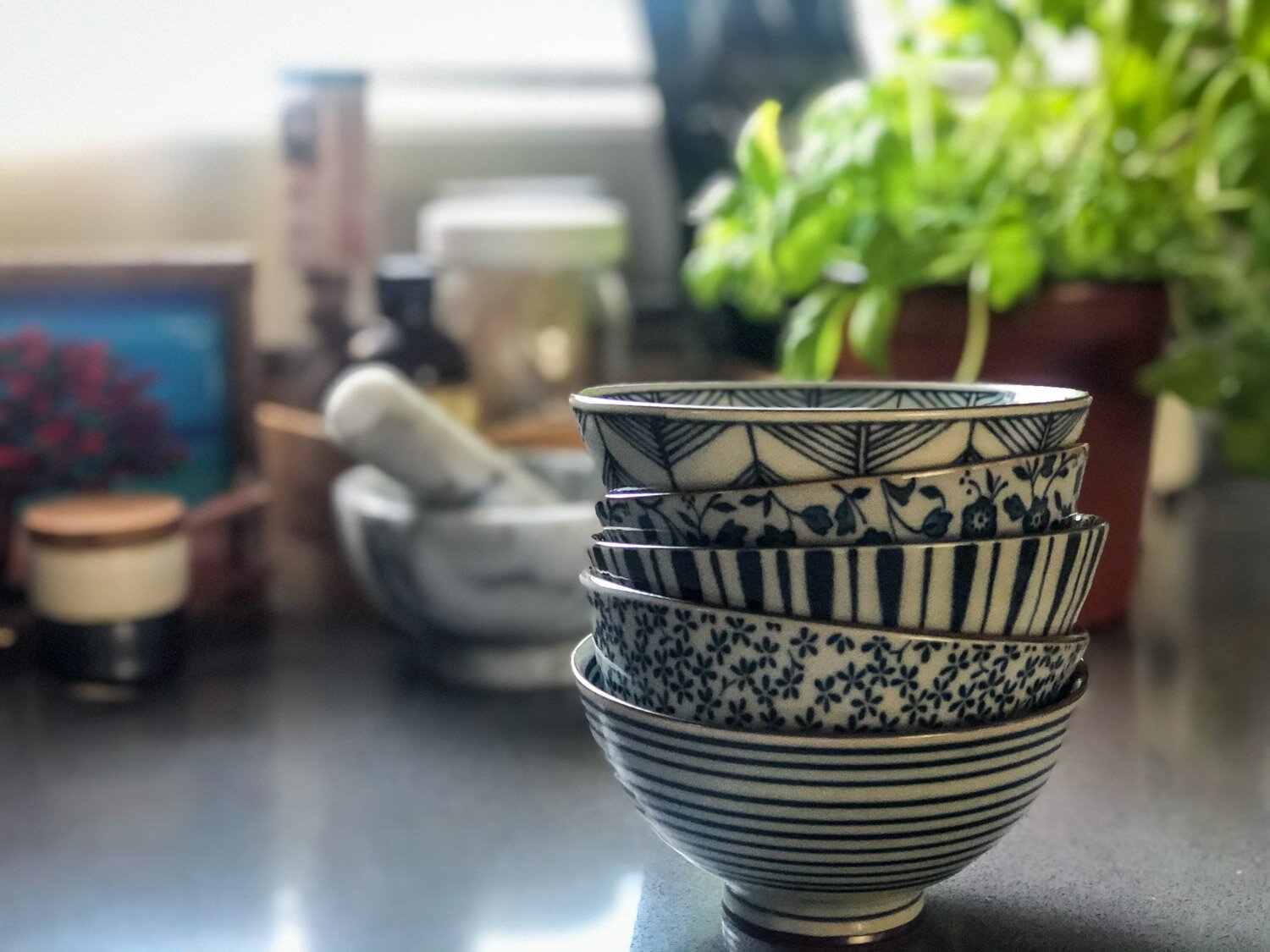
Ceramics are the perfect souvenir from Japan because not only are they beautiful works of art, but very practical for everyday use. We bought a set of small ceramic bowls from a tiny boutique in Tokyo. Choose from all shapes, sizes and styles to fit your taste.
Now every time I eat ice cream out of our bowls (which is more often than I would like to admit), I’m transported to that tiny shop and begin to reminisce about our time in Japan.
4. Chopsticks
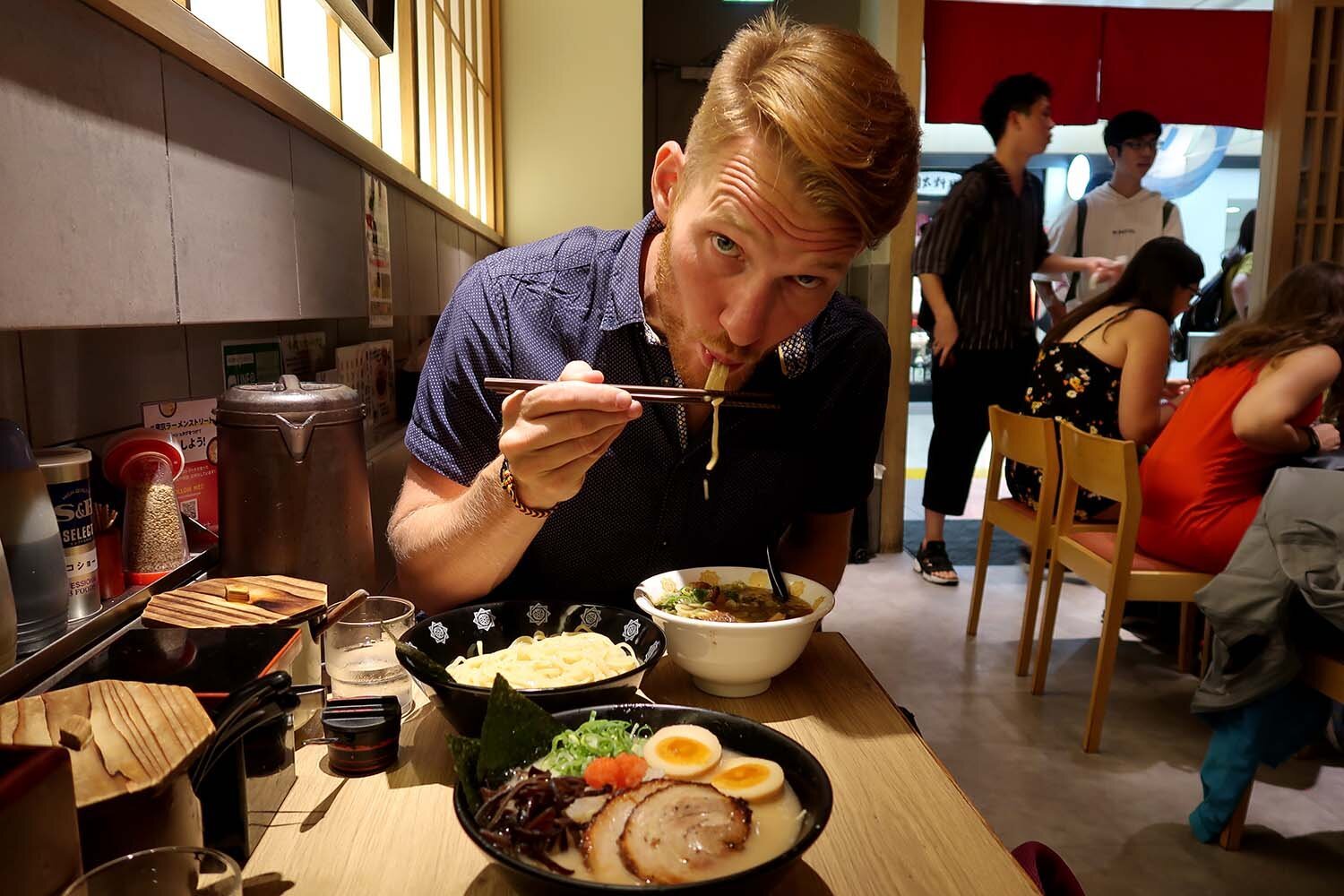
If you like to eat Asian cuisine at home, picking up some chopsticks in Japan is a great idea! You’ll have lots of different options and designs to choose from.
Think about how many sets you’d like to get. Do you often host dinner parties or do you have a big family? Maybe getting a 6-pack or an 8-pack of chopsticks is a good idea. Or perhaps you just want a set for yourself. You can select your favorite colors or patterns and even have it engraved with your name.
🥢 Make your own chopsticks in Gion
In this workshop, you’ll choose the type of wood you want, then use traditional techniques to carve your own custom chopsticks. You can even engrave them, making a special souvenir (or a thoughtful gift!).
Psst! We have whole article on foods to try in Japan, and let me tell you, there is so much more than ramen and sushi…
5. Ema
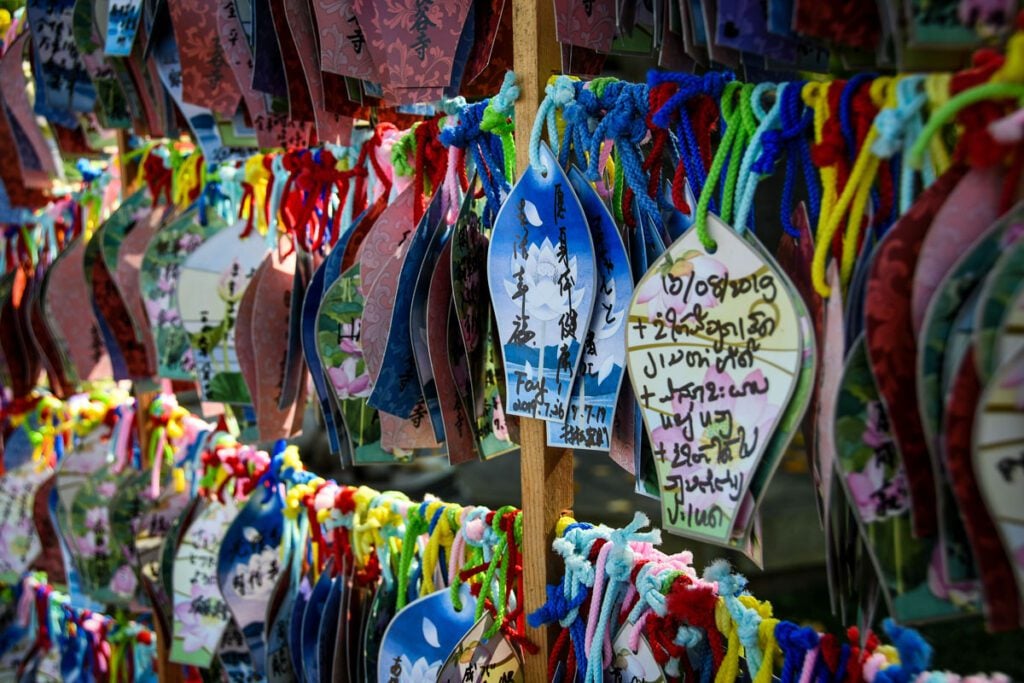
Ema are wooden plaques in Japan traditionally used for writing wishes or prayers, often found at Shinto shrines.
Purchase an ema from a designated area near the shrine. Write your wishes or prayers on one side, then hang it on a dedicated display board at the shrine or keep it as a souvenir.
6. Sampuru (mini food replicas)
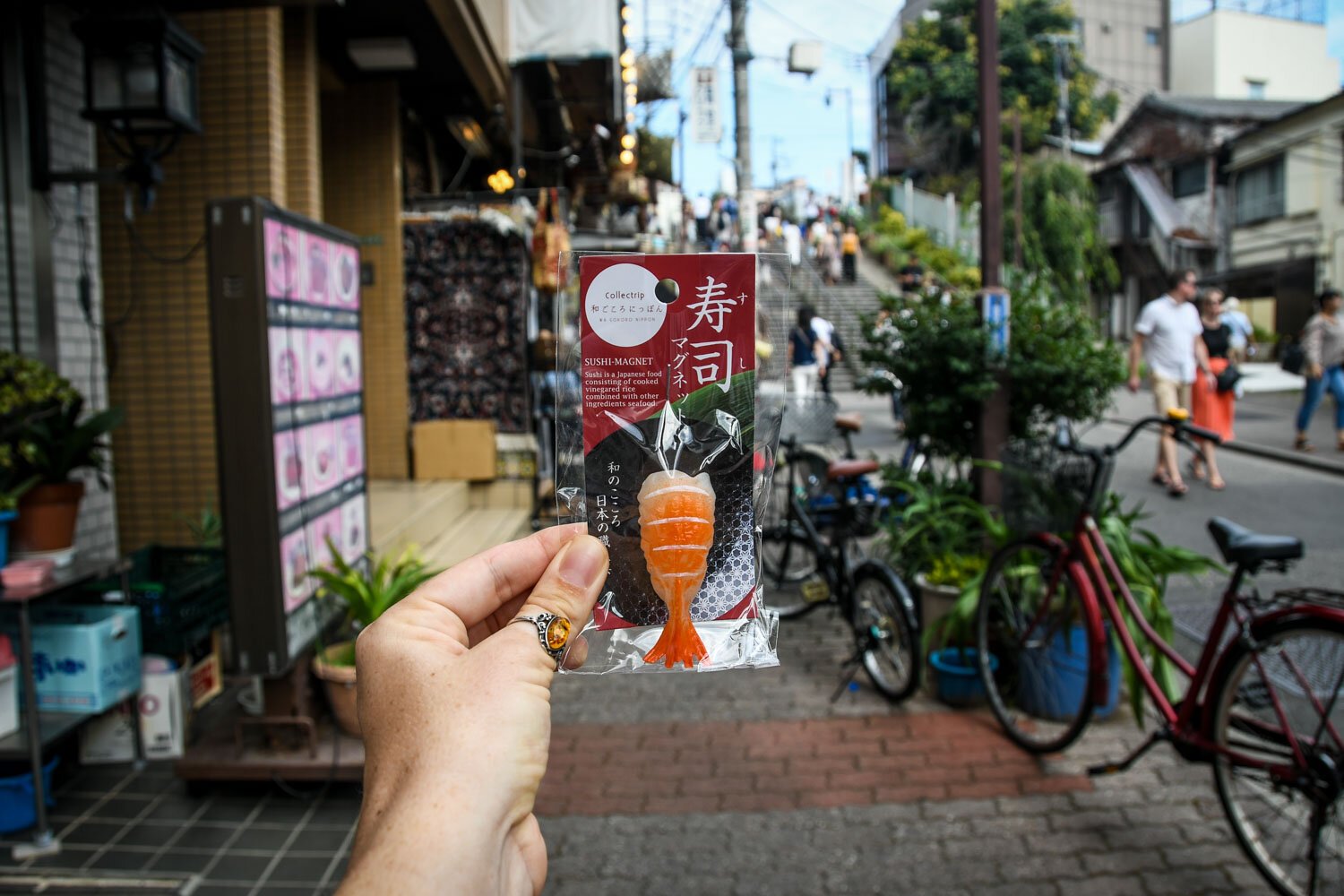
Mini food replicas make for fun, quirky souvenirs—tiny versions of ramen bowls, sushi, taiyaki, and other Japanese dishes crafted with impressive detail.
They come as magnets, keychains, or charms, making them light, affordable, and perfect for gifting. I once brought my brother a sushi magnet, and he absolutely loved it.
🍤 Make your own sampuru in Kyoto
For a fun, quirky experience that is oh-so-Japanese, learn how to make your own food replicas! This sampuru class gets rave reviews, and you get a unique souvenir with an amazing backstory.
7. Pens and stationary
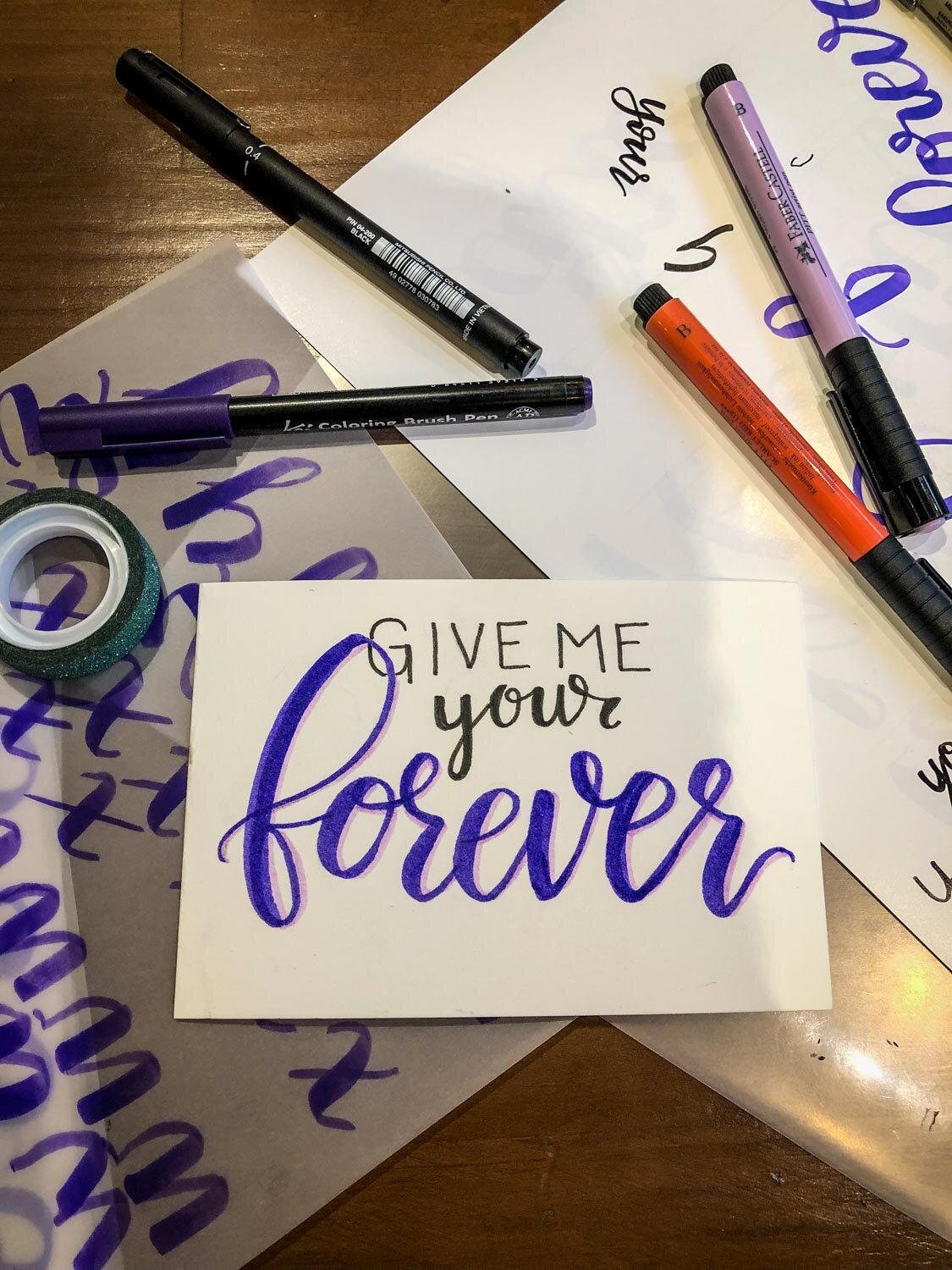
If you’re into brush lettering (or heck, just want some fancy pens!) this is a fun and useful thing to bring home.
Japan is known for very high quality brands of pens and paper. Some of the best being:
- Koi Brush Pens
- Tombow Brush Pens
🖌️ Learn calligraphy in Kyoto
Ever wanted to learn calligraphy? I can think of no better way than a calligraphy class in a Buddhist temple in the heart of Kyoto!
8. Japanese Fan
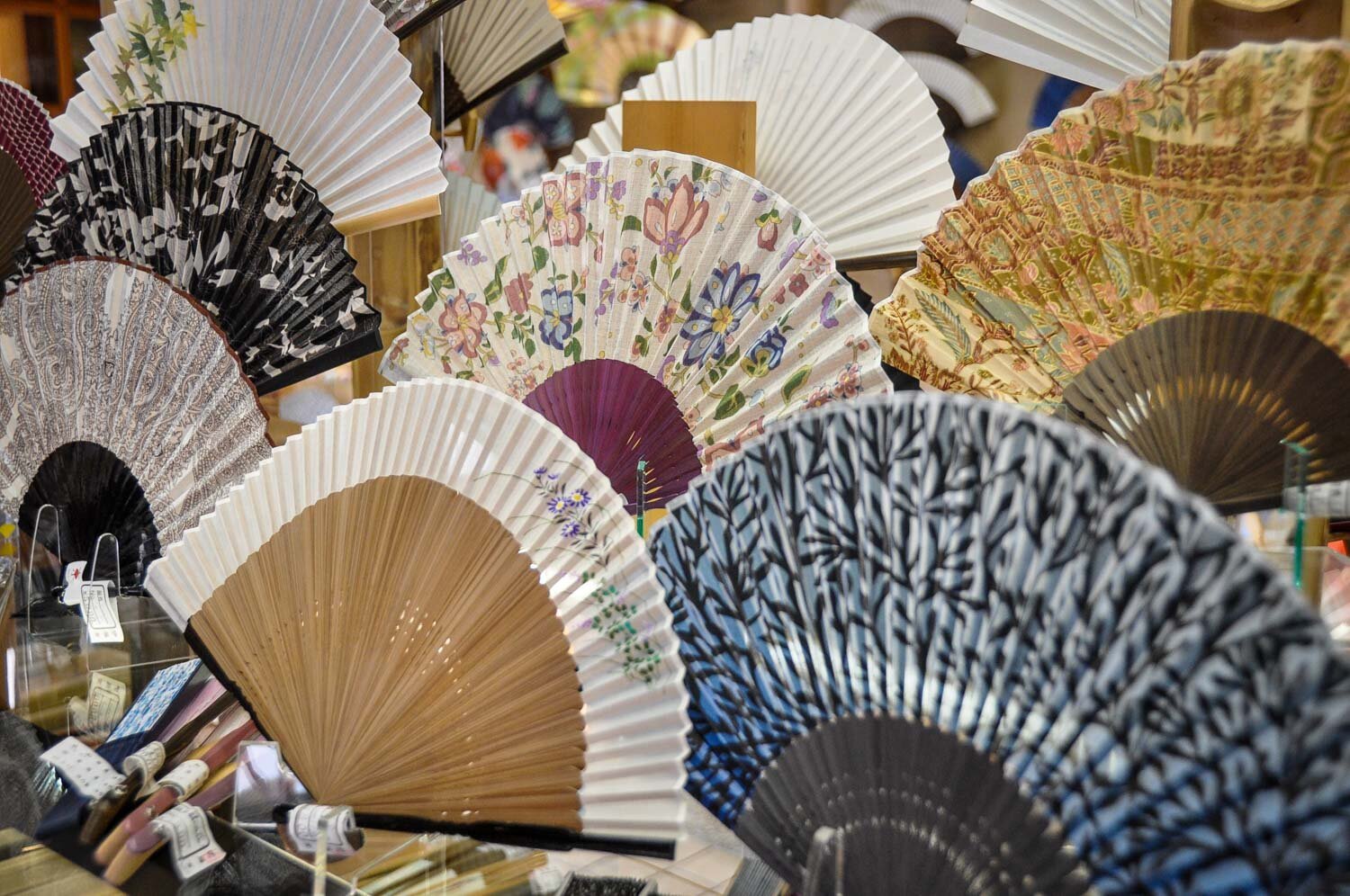
A beautiful, hand-painted fan was on my must-buy list during our first trip to Japan. And I was spoiled for choice!
It’s important to know that the quality of fans varies quite a bit. The cheapest are often mass-produced in China, and therefore are not true Japanese fans.
If you’re looking for the real deal, there are many shops dedicated solely to fans, and the store owners can tell you more about each one.
We paid around $25 USD for our fan, so it was certainly not the highest quality. But it was just what we were looking for and how much we were willing to spend.
9. Artwork
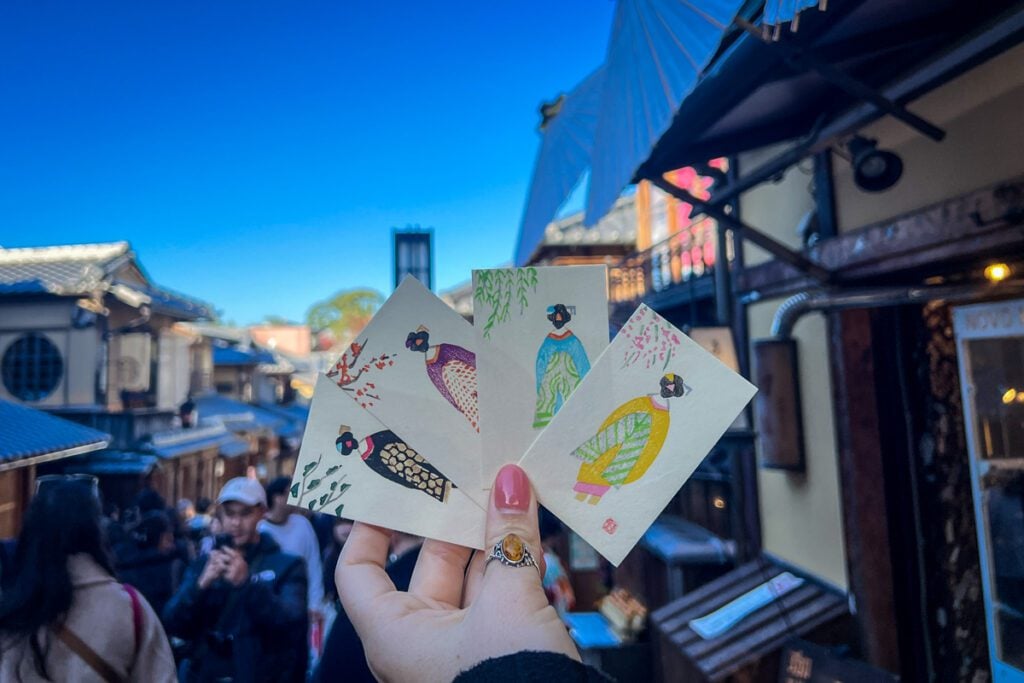
When in doubt, you can’t go wrong with buying a piece of artwork as a souvenir. We love purchasing small prints on our travels because they are so easy to fit in our luggage to bring home with us.
You can find all kinds of artwork and prints in Japan in small boutiques and markets.
10. Charm (Omamori)
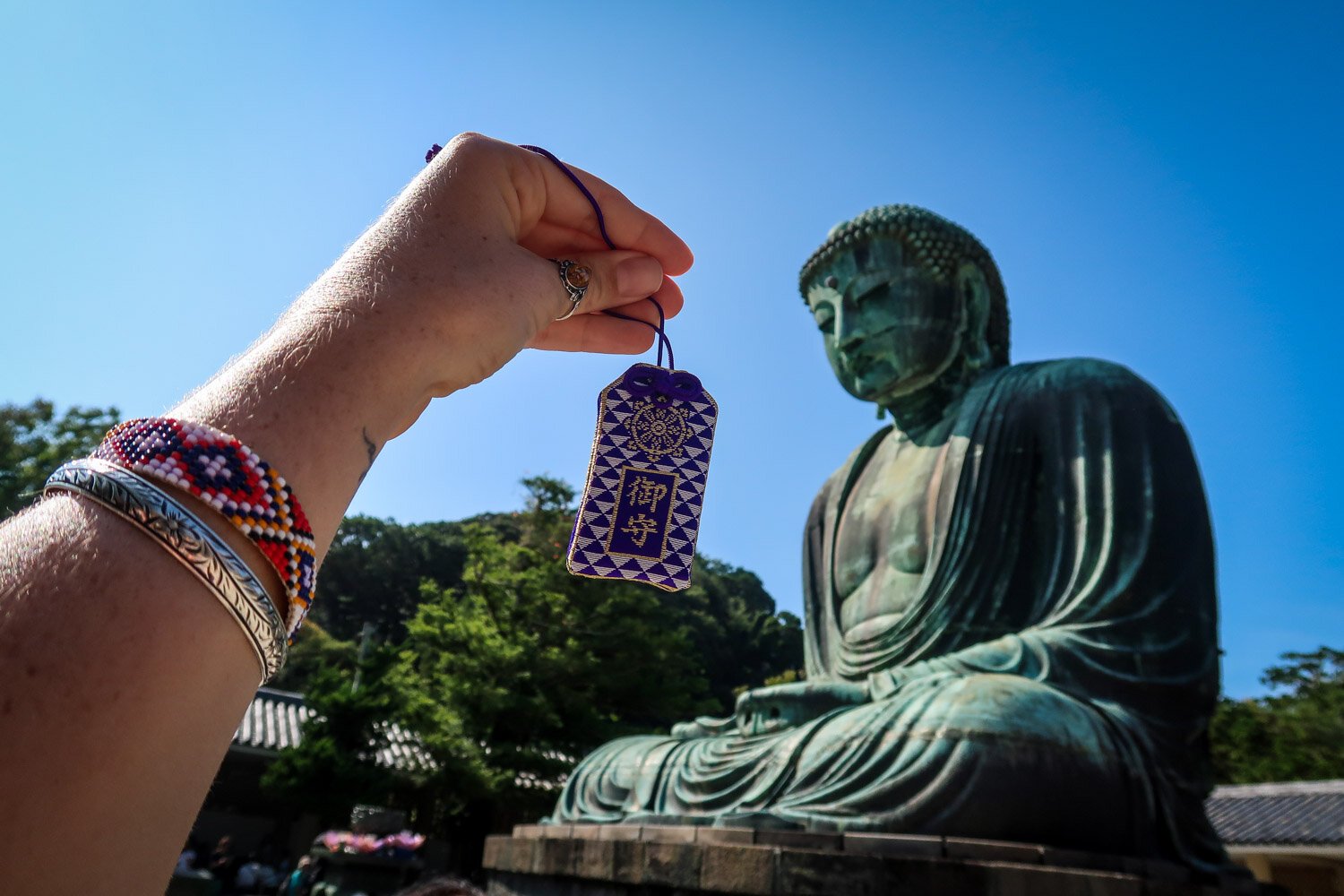
You can find these charms at just about every large shrine or temple, and they make a meaningful and inexpensive memento.
We chose one that means “protection against calamities” and hung it on the review mirror of our car. Hopefully it does what it says!
11. Daruma
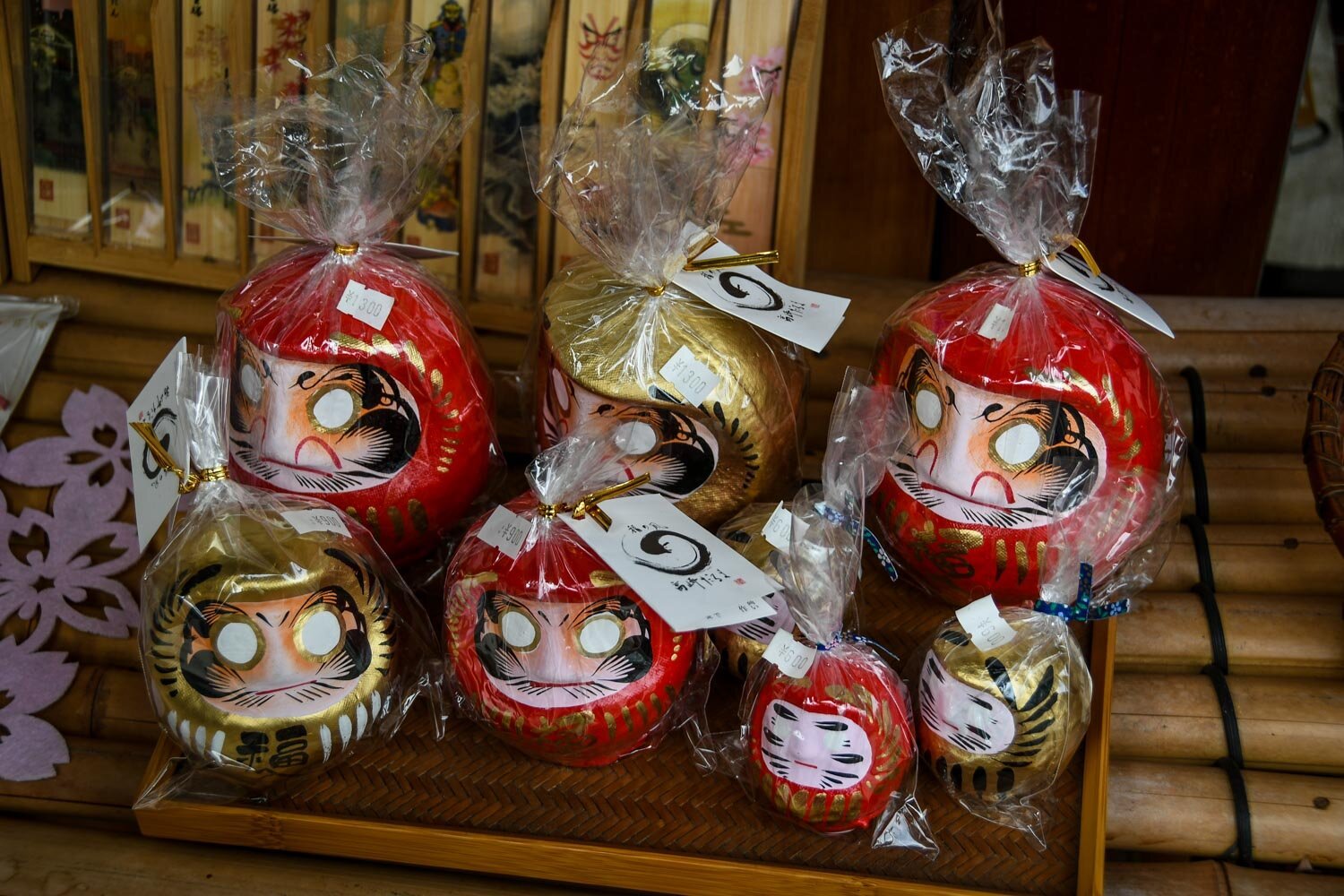
This is one of our favorites, and we actually bought one of these guys on our most recent trip to Japan.
These figurines come in all different sizes, so you can choose one based on how much space is left in your suitcase!
The Daruma Doll has blank eyes. When you bring him home, you are supposed to set an intention or goal and color in one of the eyes. The other eye should be left blank until you complete this goal. That blank eye is a constant reminder of your intention, and trust me when I say it really motivates you to make those dreams happen!
🪆 Paint your own Daruma in Kyoto
Join a local artisan in their cozy Kyoto workshop and paint your own Daruma with this highly-rated experience.
12. Waving kitty (Maneki Neko)
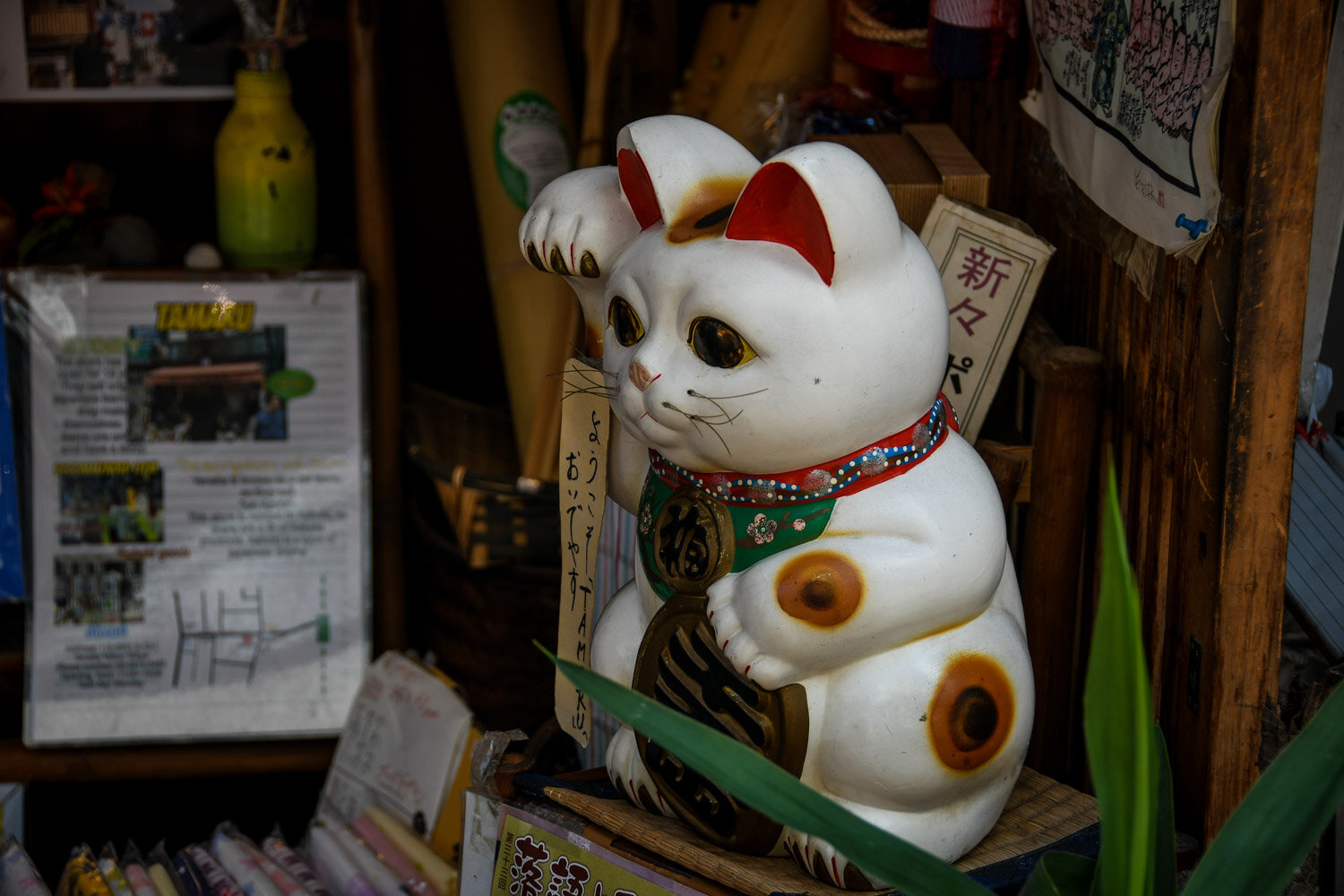
You know those cats with the waving arms that are ubiquitous to Asian restaurants? Well, you can find them everywhere in Japan and they have a pretty cool meaning, making them a great souvenir option.
Those kitties have a name: Maneki-neko, or “beckoning cat”.
They are said to bring good fortune to their owner. I think we all could use some good fortune, so go ahead and buy a few maneki-neko on your travels to give as gifts when you return home. And no, buying more than one does NOT make you a crazy cat lady (or man).
13. Origami
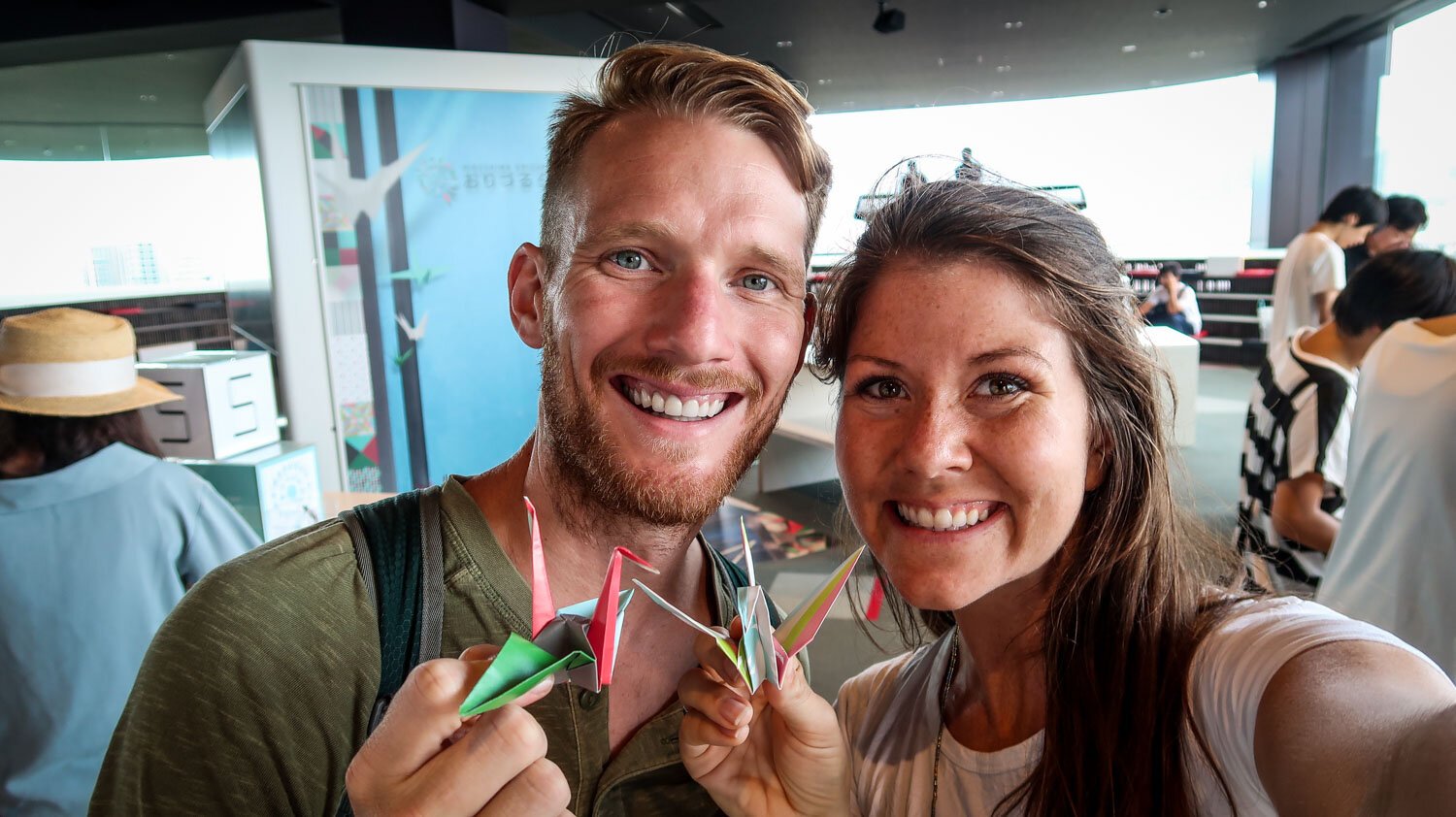
The paper folding art dates back to the Edo Period in Japan. From paper cranes to boxes to tigers, there is really no limit to what you can make out of origami.
If you are traveling to Hiroshima, it’s worth a visit to the Orizuru Tower. The word orizuru means “paper crane” and on the 12th floor of this tower, there is an interactive exhibit where you can make your own origami crane.
14. Yen coins
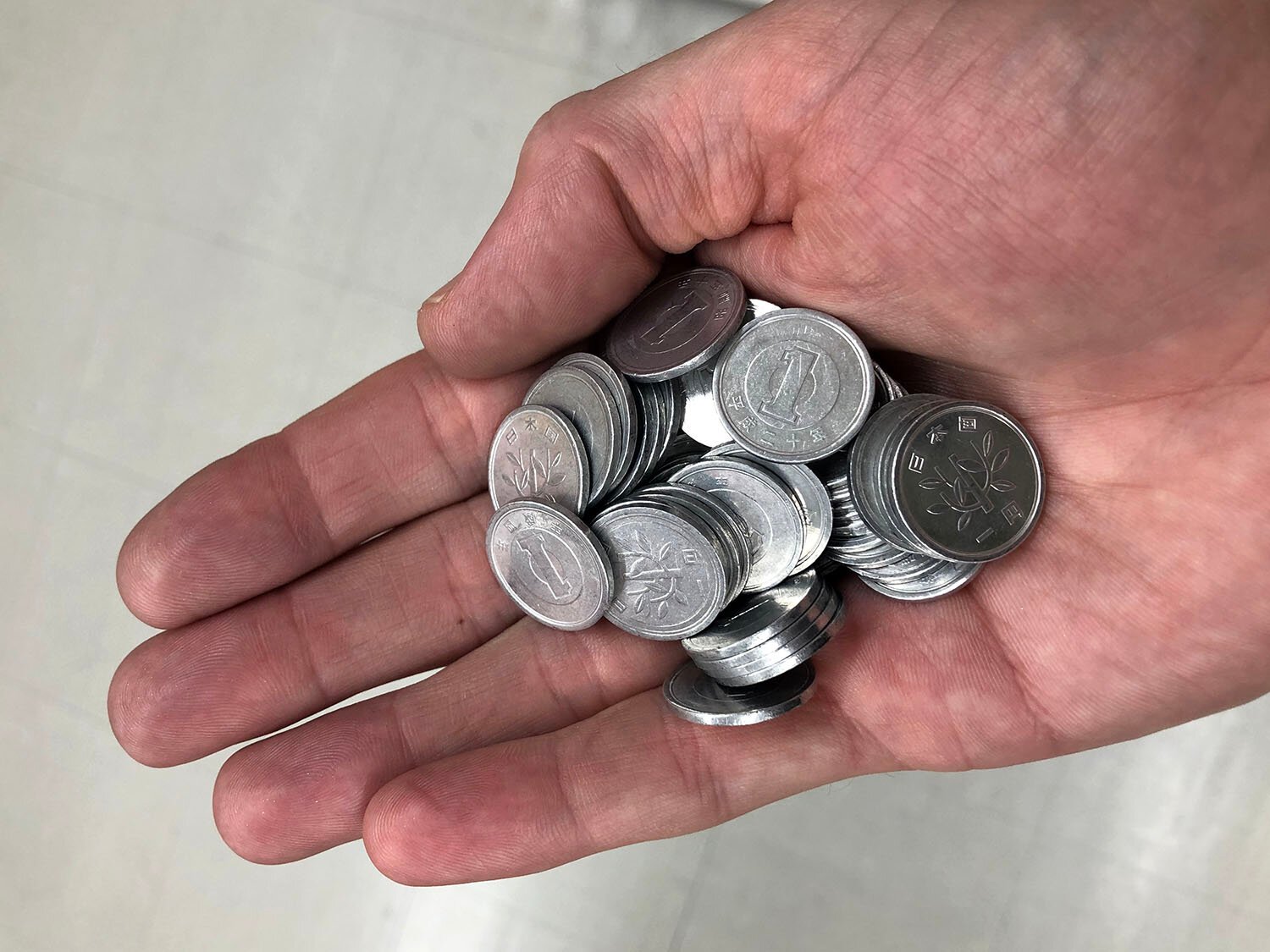
We like collecting a few coins from each country we visit. It’s a simple and cheap Japanese souvenir that we don’t need to make an effort to seek out.
Yen coins are pretty cool looking too, especially the ¥5 and ¥50 yen coins, which have a hole through the middle.
15. Purikura
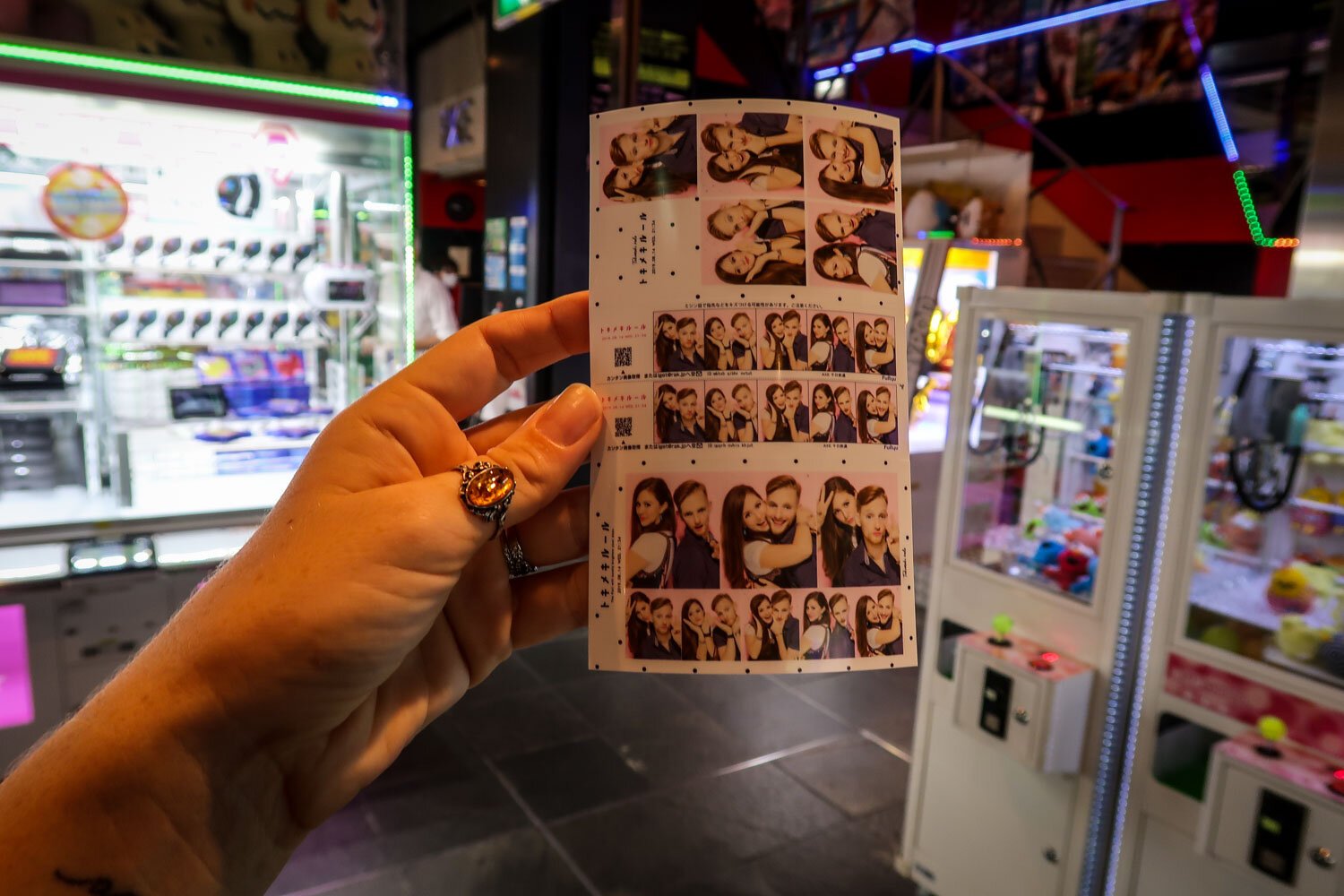
This cheap Japanese souvenir doubles as a fun experience you can only have in Japan!
Purikura are unlike any photobooth you’ve ever tried. You won’t simply snap a few poses and have your pictures printed out… Instead, you’ll get to alter the images by adding virtual stickers, makeup, and backgrounds, leaving you with a hilarious souvenir from your trip to Japan!
The one we visited in Osaka was 400 yen.
16. Japanese spice mix
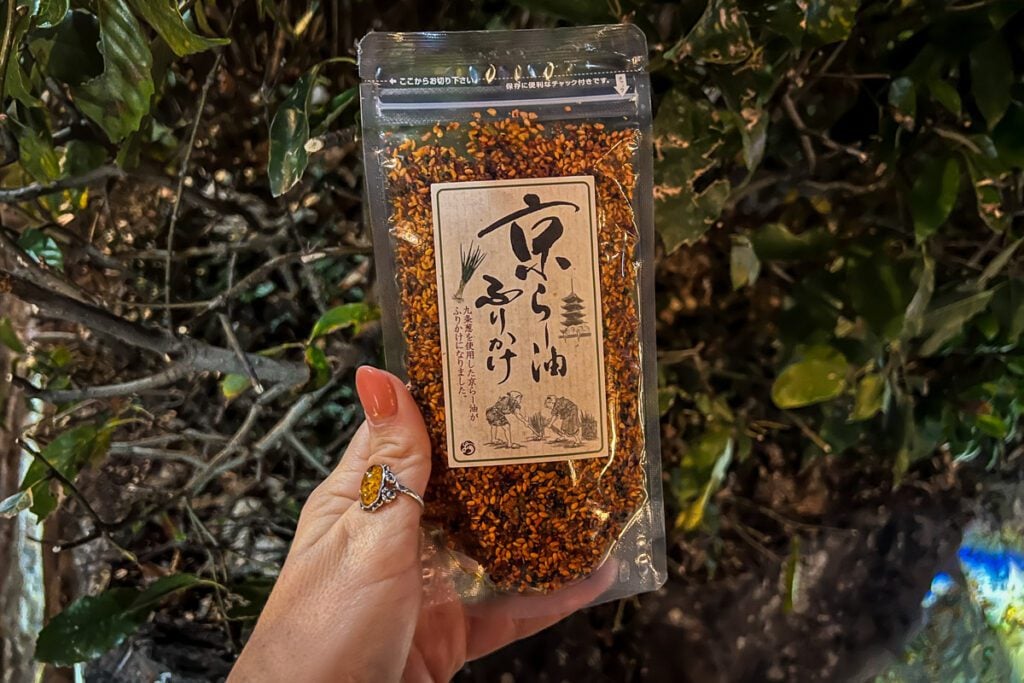
Japanese spice mixes are flavorful blends that add a kick to various dishes.
You can find Japanese spice mixes in local markets, supermarkets, or in specialty spice shops in Japan. Look for Shichimi Togarashi (a general Japanese seven spice blend) or other regional spice mixes that reflect the unique flavors of the area you’re visiting.
We bought our “Kyoto-style chili oil flavor seasoning” at a market in Kyoto. You can also find it in this market in Arashiyama. They have samples in store so you can try it before you decide to purchase.

Psst! Our Classic Japan Itinerary includes 14 fully-planned days across Tokyo, Osaka, Hiroshima, and Kyoto with the specific spots, restaurants, and insider tips that make a trip truly unforgettable. See what’s inside our Japan Itinerary →
17. Japanese Sweets
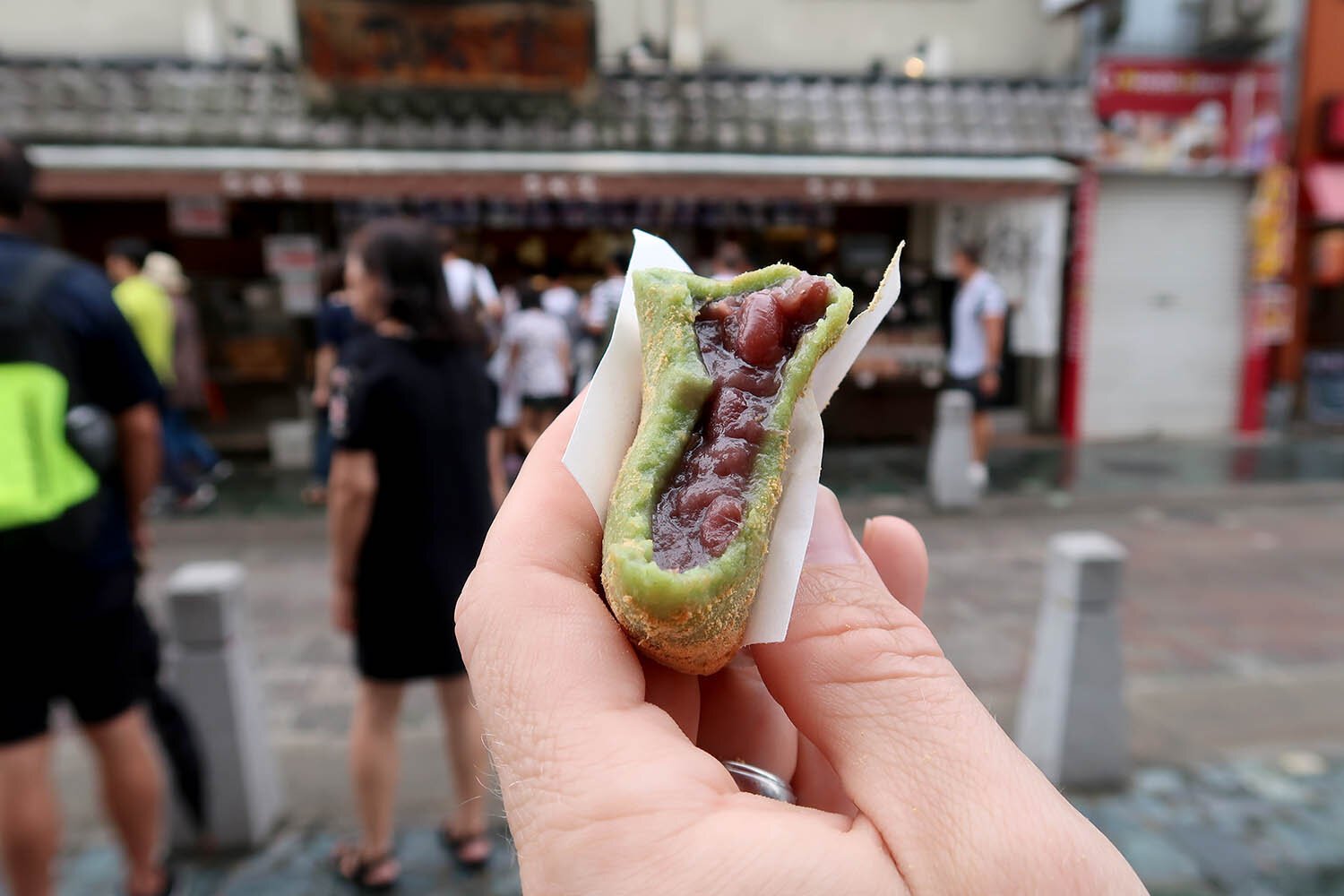
Traditional Japanese sweets like manju or daifuku make perfect souvenirs. Manju are rice cakes filled with flavors like red bean and are usually prepackaged for easy travel.
A surprisingly popular souvenir is Kit Kat. In Japan, the name sounds like “good luck,” sparking a craze with over 200 unique flavors, from matcha and caramel to edamame and soy sauce.
We didn’t really hop on the Kit Kat train, but we couldn’t resist the Sugar Butter Sand Tree cookies—a truly addictive treat you have to taste to believe.
18. Sake or Whiskey
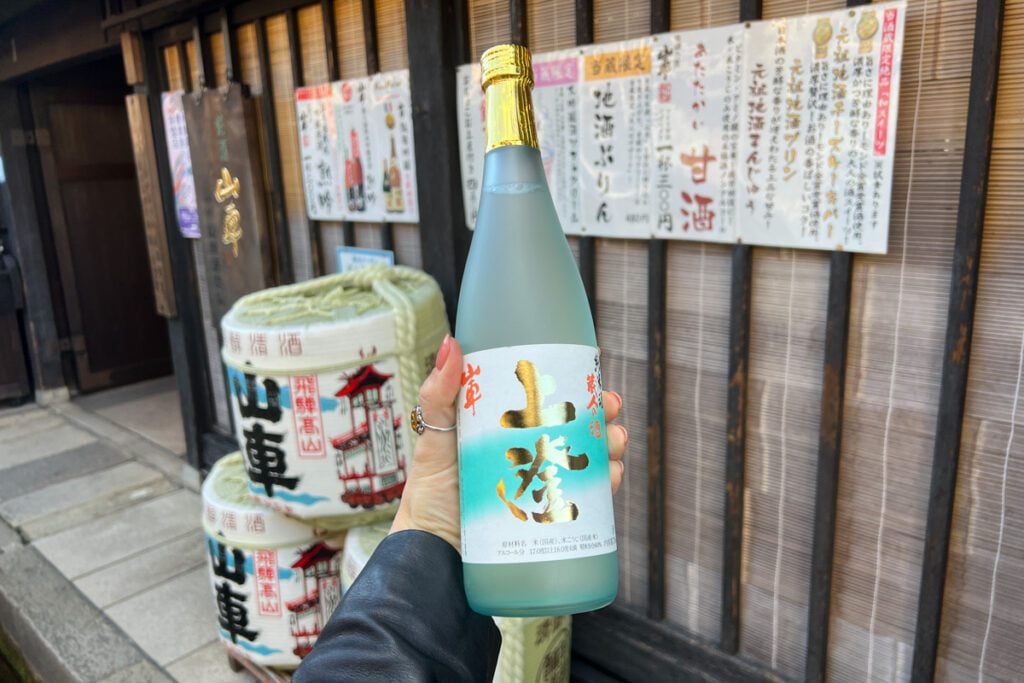
If you’re a fan of sake or Japanese whiskey, why not bring some of the good stuff home with you?! This would be a fun way to share a taste of Japan with family and friends back home (or just stash it all for yourself, no shame in that!)
19. Japanese recipes
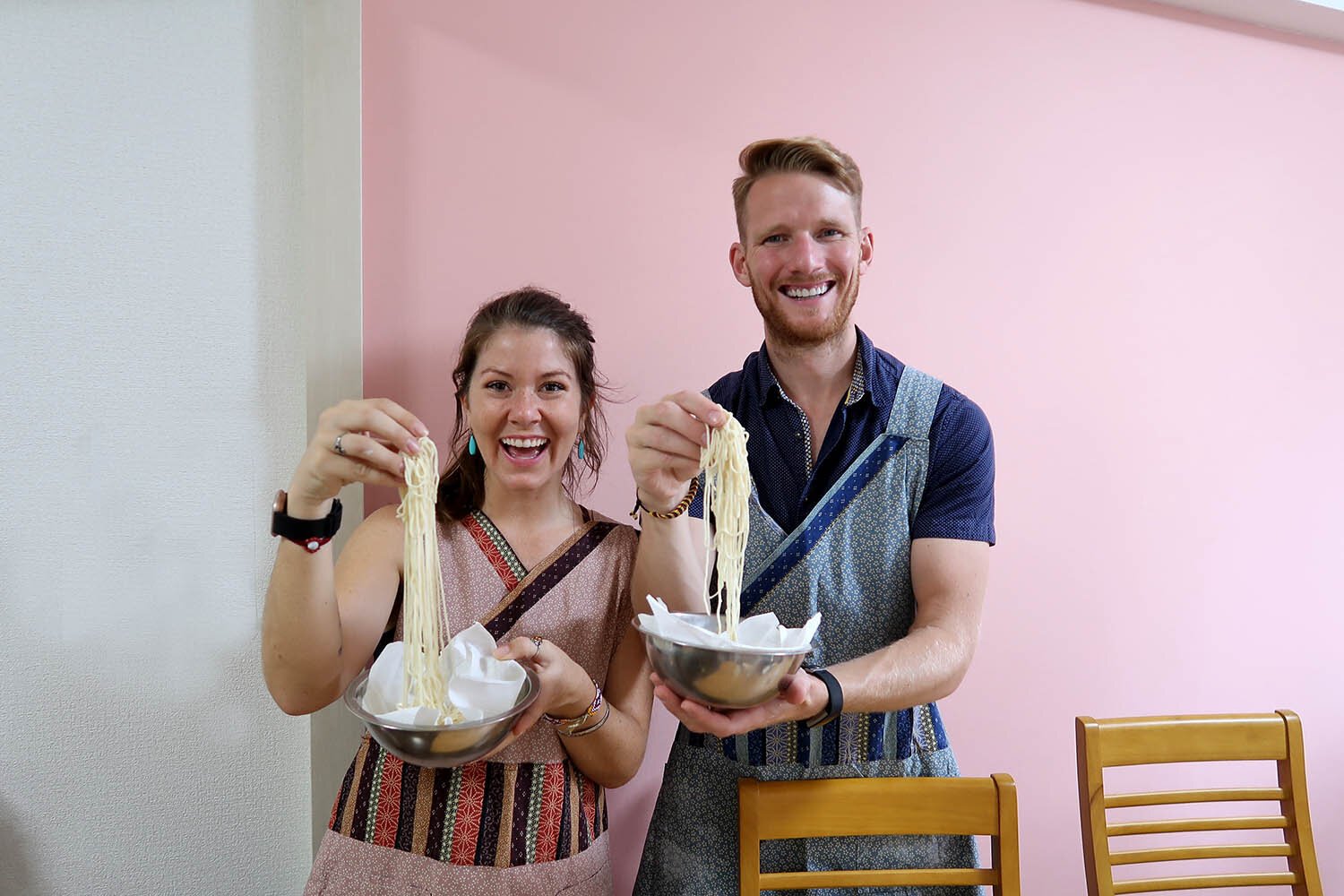
This souvenir is a bit more abstract, but bear with me…
We are obsessed with taking cooking classes on our travels around the world. Not only do we get to have an incredible meal, but we get to spend time with a local and get a deeper glimpse into the culture. After every cooking class we’ve taken (and we’ve taken lots!) we have been gifted with a recipe card or book to bring home with us. This is truly the souvenir that keeps on giving because we can now recreate this meal at home.
While traveling in Japan, we took a sushi-making class and a ramen-making class, both of which were fun!
20. Matcha tea
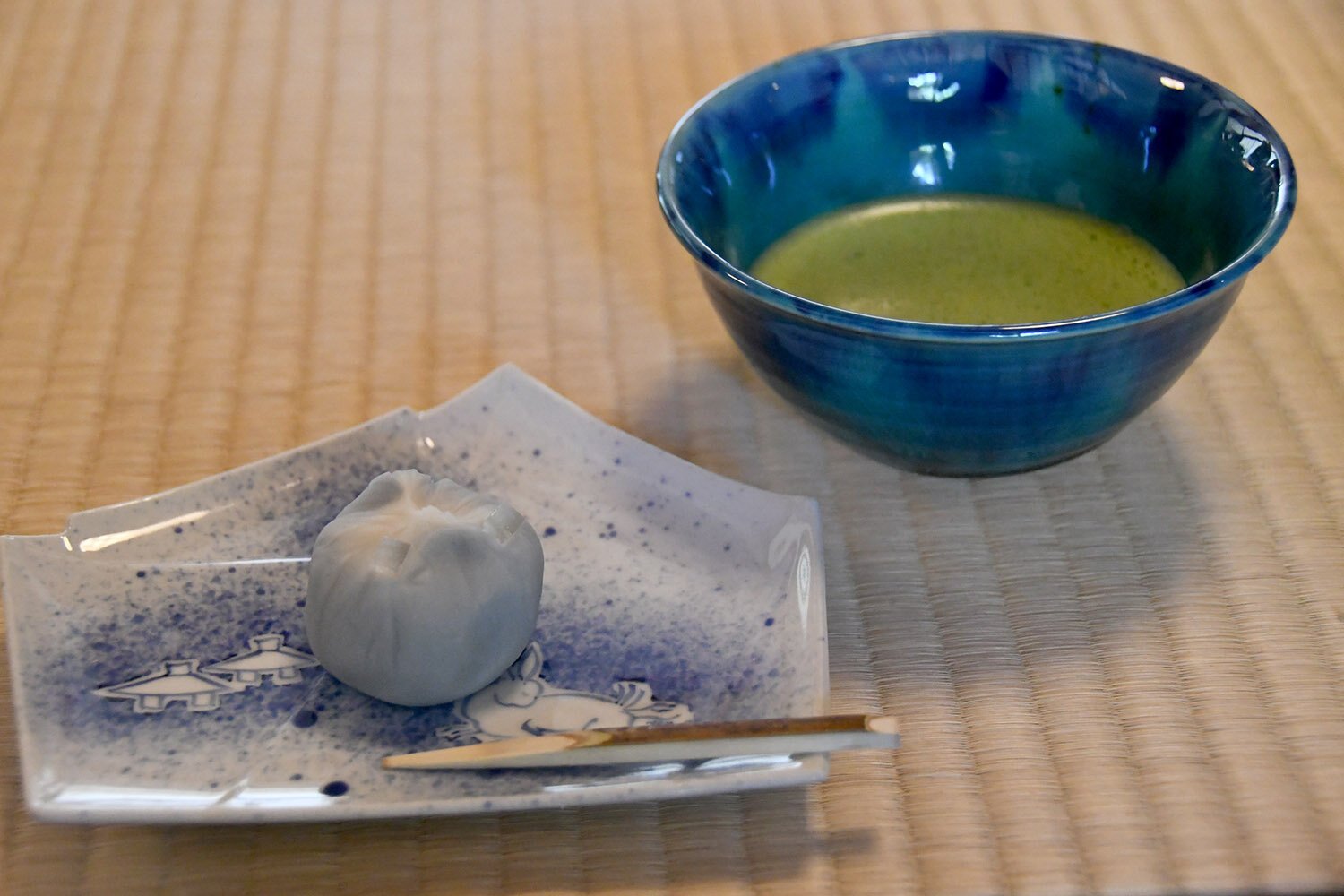
If you’re one for edible souvenirs, bringing home some matcha is about as “Japanese” as you can get. This powdered green tea contains many antioxidants and claims to have many health benefits.
Plus, it packs up well and makes great gifts for friends and family back home.
To learn about the history of matcha tea and how to properly brew it, there are many tea ceremony tours you can take throughout Japan.
21. Yukata or Kimono
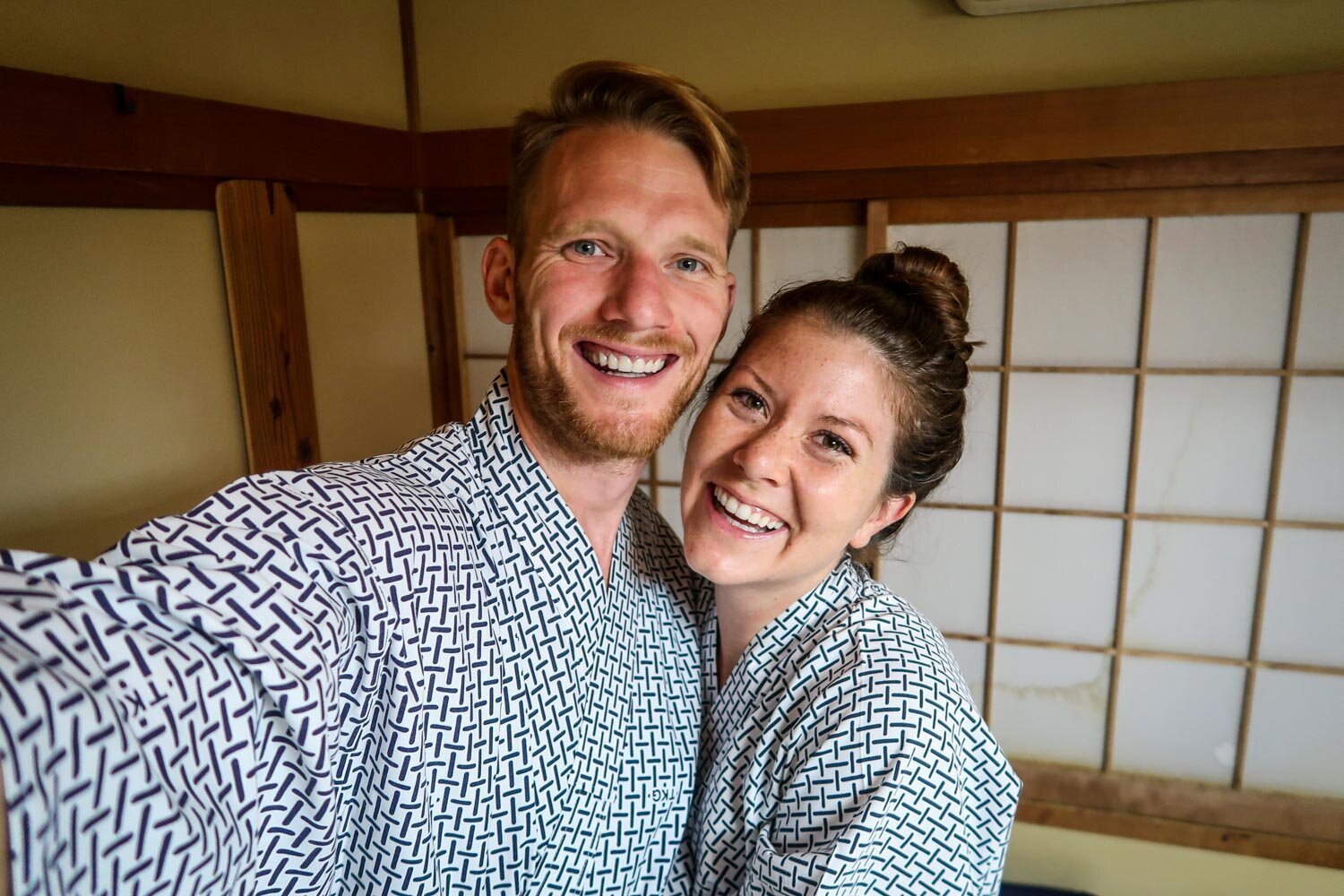
If you have an affinity for Japanese culture, a kimono or yukata might make a great souvenir.
Yukata are typically make out of lighter material such as cotton. They are worn around the home or out during summer months.
Kimono are usually a nice fabric like silk and are traditionally worn as a two collar piece. Kimono is reserved for more formal events like graduations or weddings, however it is common to see Japanese people wearing this traditional attire for work functions too.
A Kimono is more expensive than a yukata because of the quality of material, but you can try one on in most cities if you find a fitter.
22. Japanese Cosmetics
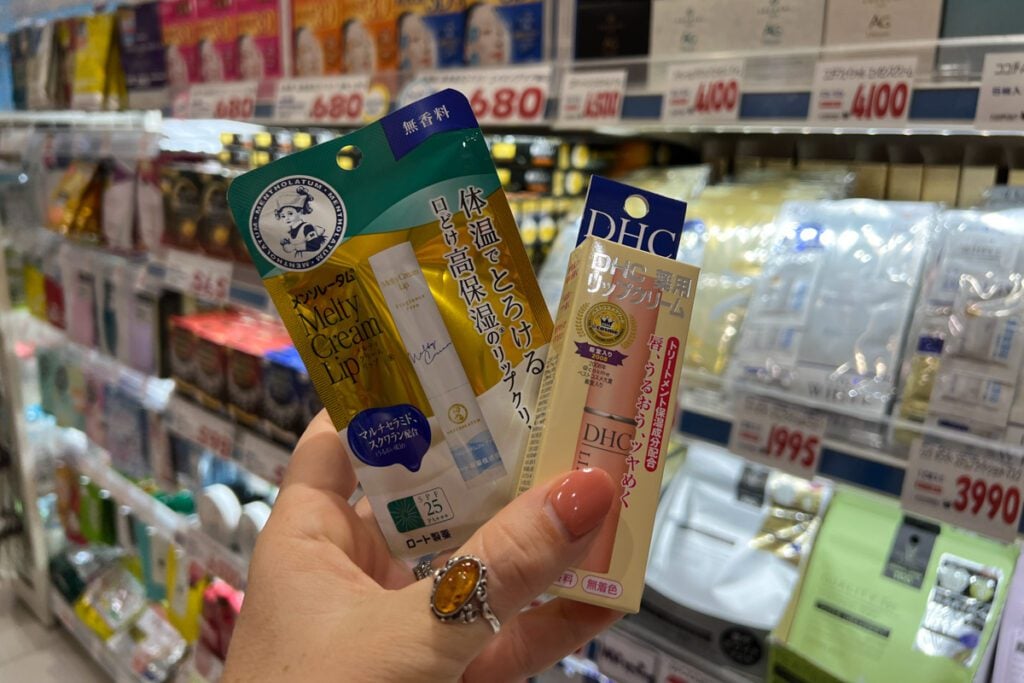
Similar to South Korea, Japan is known around the world for it’s cosmetics. From serums to facemasks to makeup, in recent years Japanese cosmetics have used technology to make innovations in the industry.
There are drug stores and cosmetic boutiques sprinkled in every major city, but the one that stands out to me us is Etude House, which is actually Korean brand. You can find high quality products for a faction of the price back home.
23. Name stamps
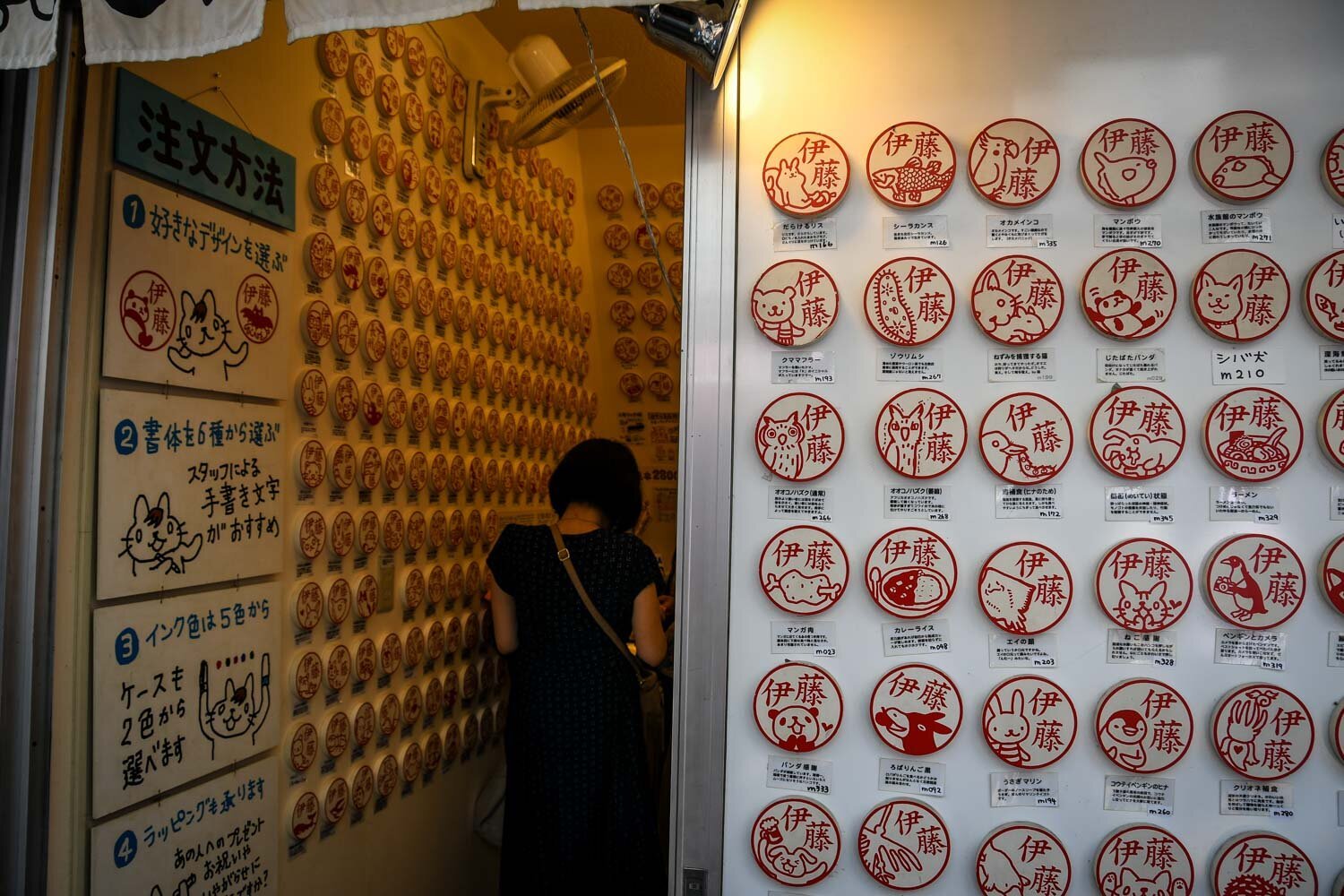
Traditionally used to sign your name on official documents, these name stamps, called Hanko, are quite popular gifts in Japan. In fact, almost every adult in the country has one.
You can go to a shop like the one pictured above and get your name translated into Kanji, the Japanese language. Or you can your favorite cartoon or emoji etched on a stamp for fun. You can find a hankoya (hanko shop) in most neighborhoods.
24. Umbrella or Parasol
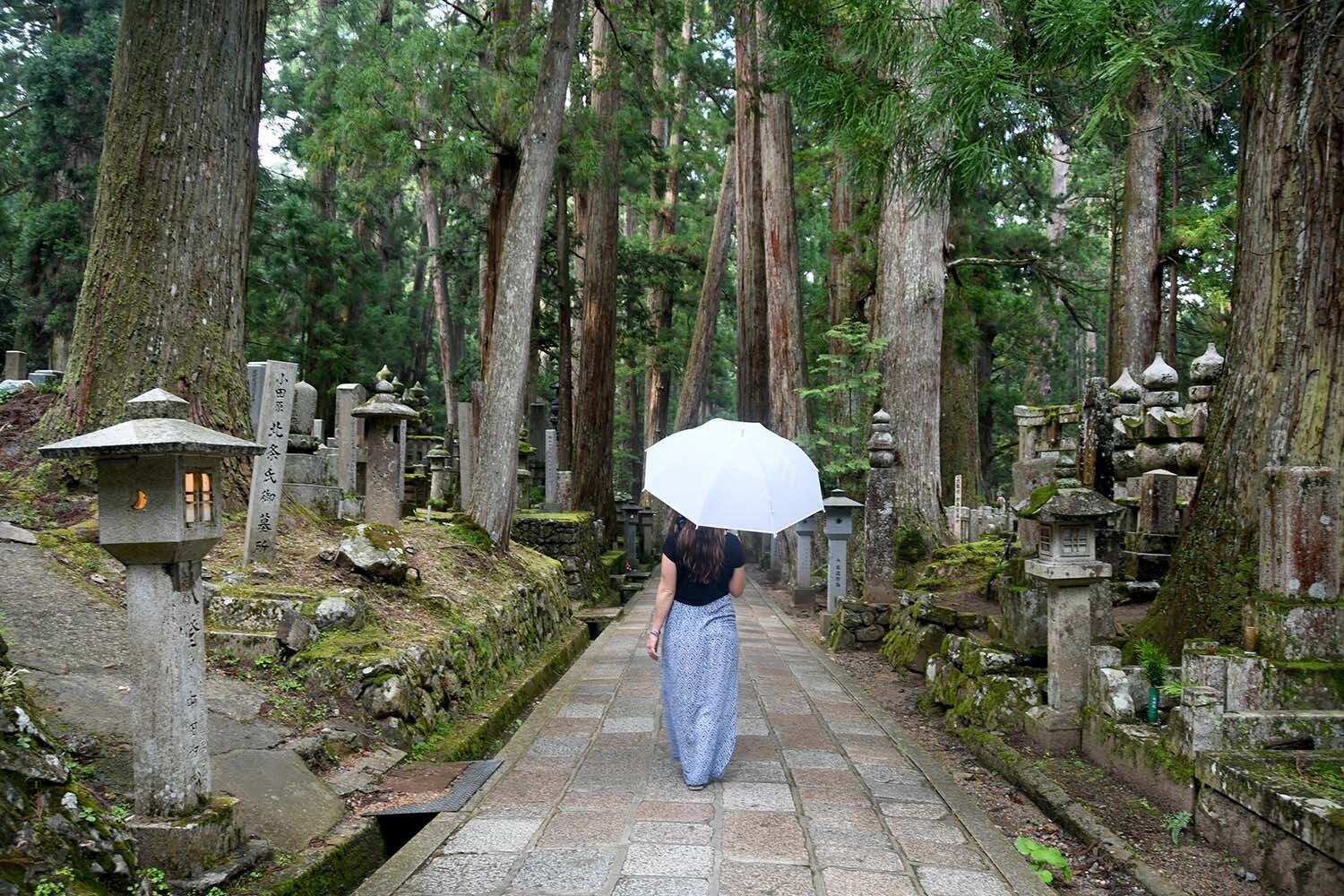
There are few things more iconically Japanese than the parasol, a thin umbrella to provide shade from the sun. They come in all shapes, sizes and colors with countless designs. Most souvenir shops in Japan will have parasols on sale.
While in Japan we purchased an umbrella because it was typhoon season, which came in handy.
Parasols can pack up pretty small and can easily fit in checked luggage for the flight home.
☂️ Make your own parasol in Kyoto
Learn the centuries-old art of parasol making and take home your own miniature version.
25. Hair Pin (Kanzashi)
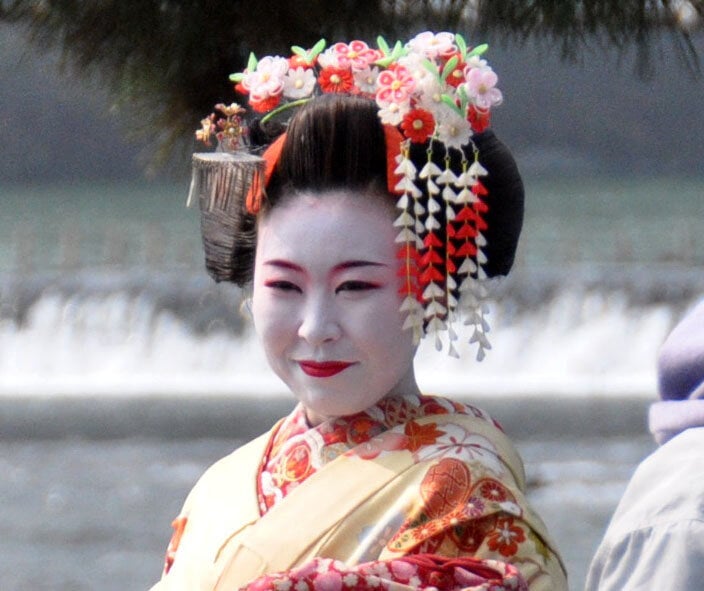
Historically, a kanzashi is traditionally worn in the hair of women during festivals or rituals along with a kimono. These hair pins can be hand-crafted works of art with many designs on the pin as well as the flower ornaments attached to them which can change seasonally.
26. Clothes or socks

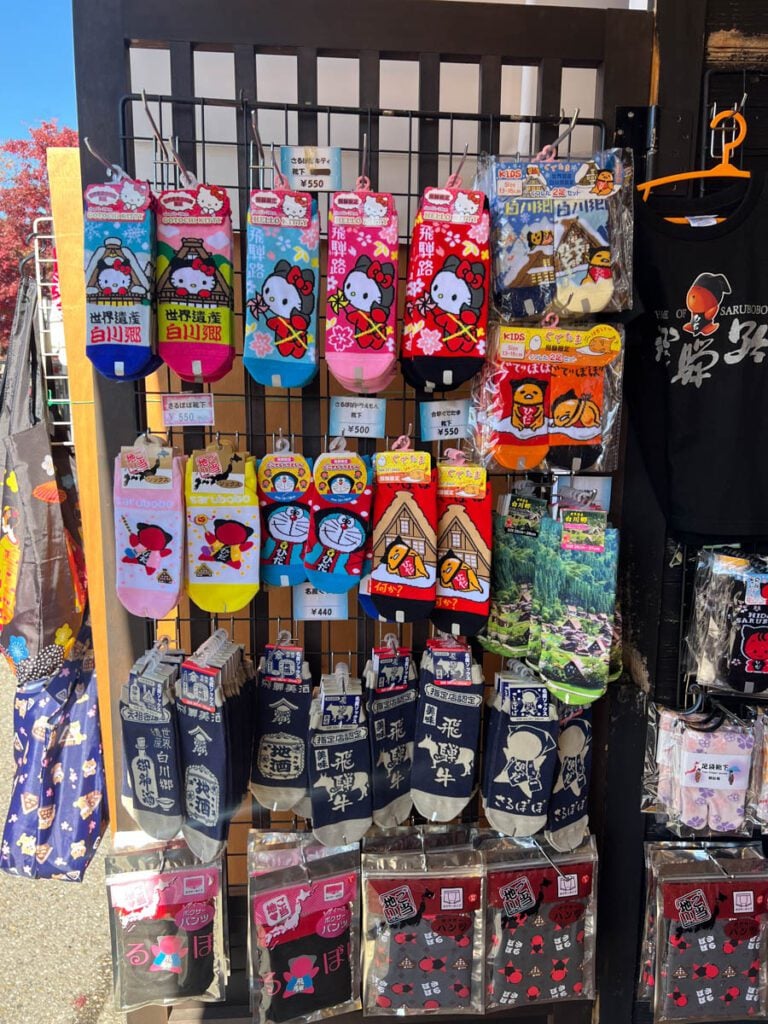
If you’re into fashion and you want to bring something home that you’ll actually use on a daily basis, you might consider getting clothing. Fun, quirky socks make a cheap (and practical) item to bring home from your trip to Japan. You’ll find all sorts of options to choose from.
Surprisingly, clothes in Japan are relatively inexpensive and shops are everywhere, including train stations.
27. Sarubobo doll
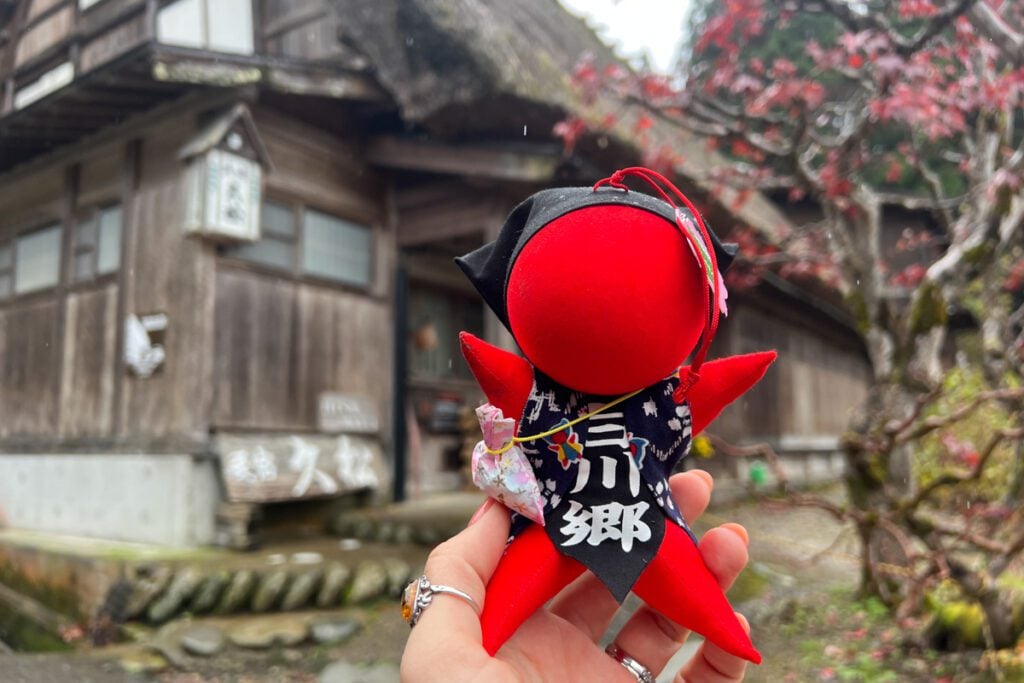
Sarubobo dolls are a traditional craft from the Hida region in Gifu Prefecture. These small, faceless dolls were originally made by grandmothers for their grandchildren.
The name comes from “saru” (monkey) + “bobo” (baby), symbolizing a monkey-faced baby. You can find them in local craft shops, souvenir stores, and markets in Hida. They are particularly popular in Shirakawa-go and Takayama.
Fun detail: Colors have meaning—red for protection, pink for love, white for purity. Buying a Sarubobo supports local artisans and makes a unique, meaningful souvenir.
28. Kintsugi
Kintsugi, the Japanese art of repairing broken pottery with gold or silver lacquer, makes for a truly special and meaningful souvenir.
Each piece is unique, celebrating imperfection and the beauty of transformation, rather than hiding flaws.
There are kintsugi workshops, where you can learn about this artform and you can create your own one-of-a-kind souvenir!
🏺 Learn the art of Kintsugi in Japan
- Tokyo: Use this mesmerizing technique to create your own kintsugi plate
- Kyoto: Craft beautiful kintsugi jewelry using ceramics and natural stones
29. Photos

Okay, this might sound like a cop-out, but honestly, our favorite souvenirs no matter where we are in the world are the photos we take. They remind us of special moments on our trip and they are uniquely ours. Plus, they don’t cost any money (other than the purchase of our phone/camera).
Psst! We’ve scoped out the shopping, now let us handle the rest of the planning too. Our Classic Japan Itinerary takes you to Tokyo, Osaka, Hiroshima, and Kyoto (the best shopping cities in Japan!) across 14 fully-planned days. See what’s inside our Japan Itinerary →
Plan your trip to Japan
After 3 trips (and counting!), we’ve fallen head over heels for Japan—and we’ve gathered TONS of resources to help you plan your dream trip. Start with our Ultimate Japan Travel Guide and be sure to check out these helpful articles:
- First time? Our Japan Trip Planner walks you through everything you need to know.
- Use our Japan Rail Pass guide to determine if getting a train pass is optimal for your trip.
- Here’s our curated list of the best things to do in Japan—from iconic sights to once-in-a-lifetime experiences.
- Not sure where to go? Our Japan itinerary ideas will help you map it all out.
- Foodies, rejoice! This guide to what to eat in Japan will have you drooling before you land.
- This guide to what to wear in Japan (and what not to wear) will help you blend in.
- Use our ultimate Japan Packing List to make sure you don’t forget anything.
- Before you go, brush up on these essential Japan travel tips (including major do’s and don’ts!).
- Avoid awkward moments by brushing up on Japanese etiquette.
Still have questions? Drop us a comment—we LOVE helping travelers plan unforgettable trips to Japan!
Perfect Japan itinerary
Want the perfect itinerary planned for you?
If you don’t have a ton of time to spend planning your Japan itinerary (or you just don’t find travel planning fun), we’ve got something you might be interested in…
We created the ultimate done-for-you Japan itinerary that is packed full of all sorts of tips we’ve gathered from 3 trips to Japan as well as literally hundreds of hours of research (no exaggeration).
We have both an off-the-beaten path route as well as a classic itinerary that hits the top attractions (perfect for your first visit to Japan!).
Don’t miss your chance to grab our Japan packing list!

This FREE PDF download includes everything you’re going to want to pack for your Japan trip, including what NOT to bring, plus tons of insider tips!
Just enter your email and we’ll immediately send you access instructions!
Save this article to Pinterest!
We want to hear from you!
Are you planning a trip a wondering what to buy in Japan? We sincerely hope this guide is helpful and gives you some unique inspiration for Japanese souvenirs. Leave your comment below and we’ll do our best to get back to you!

Katie Diederichs is the lead writer and co-founder of Two Wandering Soles, where she creates in-depth travel guides, itineraries, and tips designed to help readers plan better trips with confidence. With a background in journalism, photography, and design, she combines thorough research with firsthand experience to deliver clear, practical, and visually driven travel content. As the primary trip planner, Katie turns complex logistics into easy-to-follow advice travelers can actually use.
send me details reg tousit sport what to by places of interest how to book
Wow
Your western names cannot be “translated into kanji” accurately FYI lol you do not have a Japanese name it won’t be in kanji, maybe the sound in hiragana or katakana but not Kanji lol
I’ve played with a Kendama and it gets so addicting! It’s crazy how it’s all really in the legs! Lol! One of my favorite Japanese souvenirs is definitely the handmade ceramic teacups I got in Okinawa (:
I always struggle with buying souvenirs. I want a keepsake from our travels, but I don’t want it to be useless. These are great ideas!
Some great souvenirs mentioned in your post. Many are small and can easily be carried around. I love the bowls. I bought some myself and often use them.
Great post! I bought some ceramic bowls when I was in Japan and love them. They are the perfect size and always remind me of my trip.
I can see visiting Japan would be bad for both my bank balance and storage space in my home… but I still want to go. These all look amazing
I love what you guys do and all the great content you put out, but this post rubs me the wrong way 🙁 Buying cheap, plastic souvenirs is not responsible travel. I love that you included things like ceramic bowls, cooking class experiences, and other ‘thoughtful’ reminders of what makes the culture in Japan amazing. But do travelers really need a sushi magnet that will end up in a landfill or a plastic name stamp that they will never use?
Hey Becky, Thank you for focus on responsible travel. We always try our best to travel consciously and thank you for keeping us in check.
We added the magnet because it something that is quirky, cute and totally Japanese. There are many things like this that are not plastic and we would encourage travelers to avoid plastic items when they can. But we did have a family member in mind to gift this magnet too, and we know he will use it for many, many years (he is a lover of all things quirky).
As for the name stamps, we were both gifted name stamps from our co-teachers when we were living in South Korea (also a big thing in Japan) so this item has a huge sentimental value for us. The name stamps we have (and the ones we highlight in the article) were hand-crafted and made out of wood with a small piece of rubber for the stamp.
I hope this clarifies things a bit. Thank you again for your focus on sustainable and responsible travel.